Stay awake
Stay awake
A contradiction?
Not necessarily. Sleeping well doesn’t mean turning a blind eye to what happens around us. Looking closely, asking questions and making a difference where we can: that, too, is part of KULALA.
There are many stories behind KULALA. Some are full of joy and happy surprises; others tell of detours and challenges.
Thanks to the support for KULALARide, we raised the funds to take our first steps. Here, we take you behind the scenes and share stories of unexpected places and wonderful encounters along the way to our finished bedding.
Stone Town, Sansibar
English Lessons For AMina
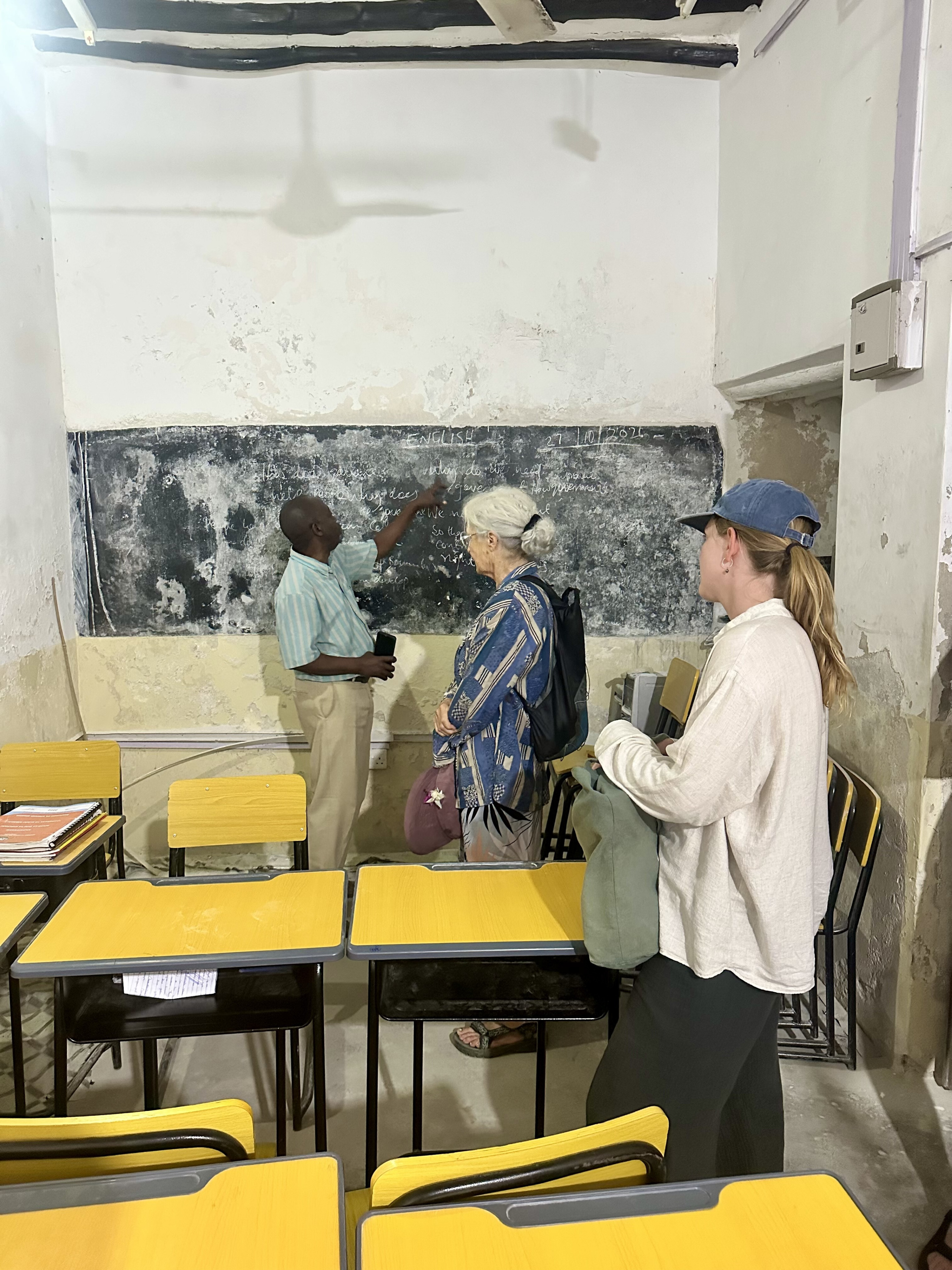
Anyone hoping to build a career in Zanzibar, or even to get a foothold in tourism, needs to speak a foreign language – English at the very least. But what can a seventeen-year-old do if she has had very little English instruction at school and already has a two-year-old son? In this situation, the chances of achieving social and financial independence are slim.
Thanks to your financial support, Amina is now attending an English course every morning for three months at a language school. The Zanzibar Alliance Institute in Stone Town also offers vocational training alongside language courses. A tailoring and sewing course could therefore be an option after her English lessons – after all, KULALA needs the next generation of seamstresses!
The school has been checked: an experienced English teacher and some other friends visited it. Bakari is certainly very proud of his classroom, though even he agrees it could do with an update to its digital equipment.
27 October 2026
Sansibar
enriching encounters
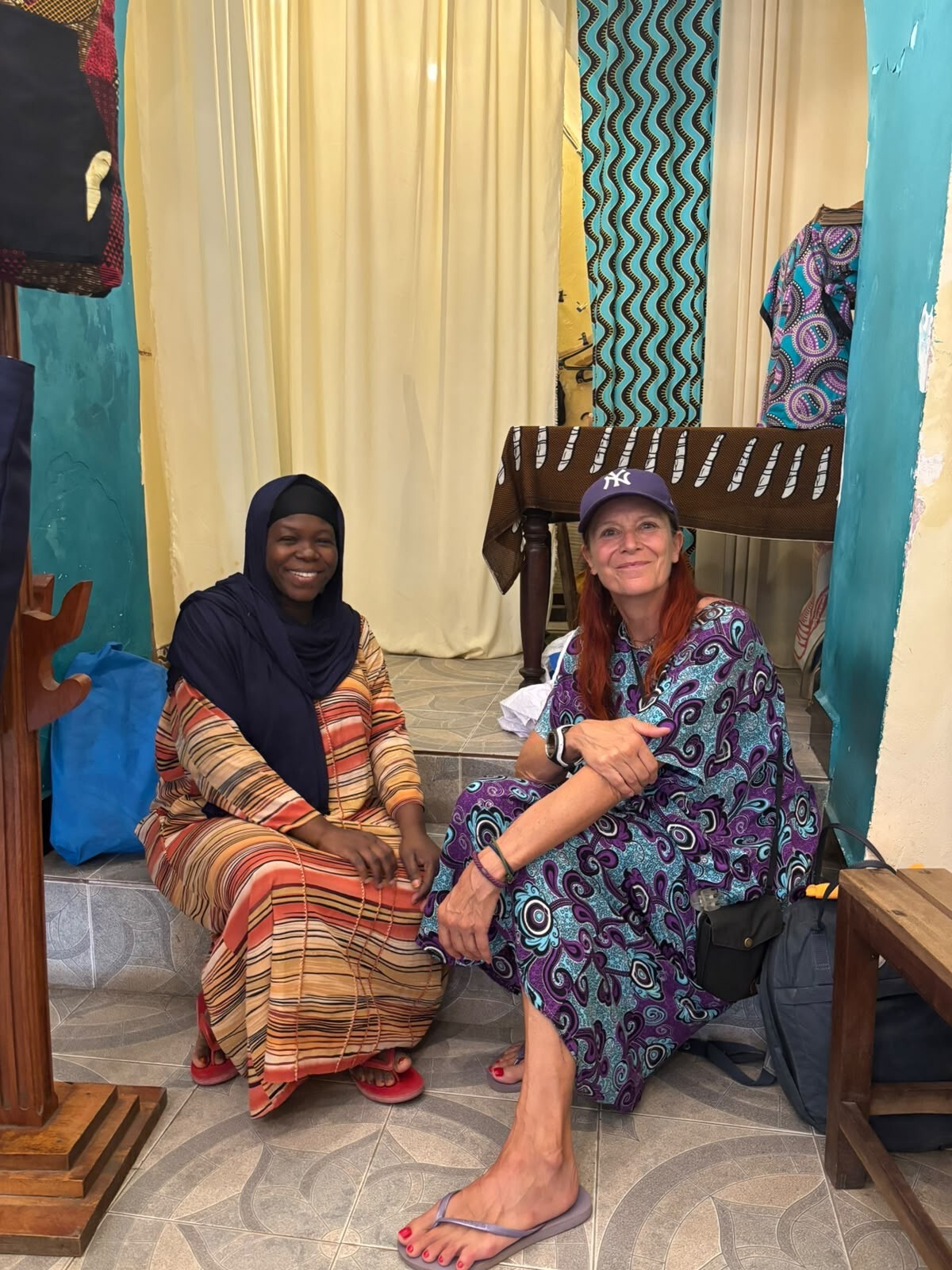
One of the loveliest things to come out of this bedding adventure has been all the wonderful people I’ve met along the way.
Working with Habiba has brought us much closer than either of us probably expected. These days, we manage heartfelt conversations in English, a little Swahili and Google Translate – and we often end up laughing together, too. There are her four sons, Saidi, Hafis, Harun and Samir, and her husband, Hashim. The family also includes Humaria and Mariam, Hashim’s two daughters from a previous marriage; Amina, Habiba’s niece; and Amina’s two-year-old son, Swaleh. I’ve already had the pleasure of meeting Amina’s mother, Rahema, in Dar es Salaam.
Then there’s Ann, my “landlady”, the project’s supervisor, a wonderful person to talk things through with and, by now, a dear friend. Her husband Edi makes the world’s best breakfast from the garden kitchen and brings it down to the beach – and he’s a fantastic cook, too.
The trips in search of fabric through Stone Town’s narrow streets and around Darajani Market have brought their own lovely stories. I meet Idris Gulamhusein, an Indian fabric seller who runs a small shop with his father. He speaks excellent English and always has good tips to share. Then there’s Faridha, who puts so much effort into finding the three matching kangas I’m looking for – for ten different designs.
And there are all the spontaneous encounters on the street with Rasta Man, Mr Cheaper and whoever else they’re called. Their company may not be very efficient most of the time, but it’s always enriching in its own way…
20 October 2026
Stone Town
NAtafuta - i am looking for ...
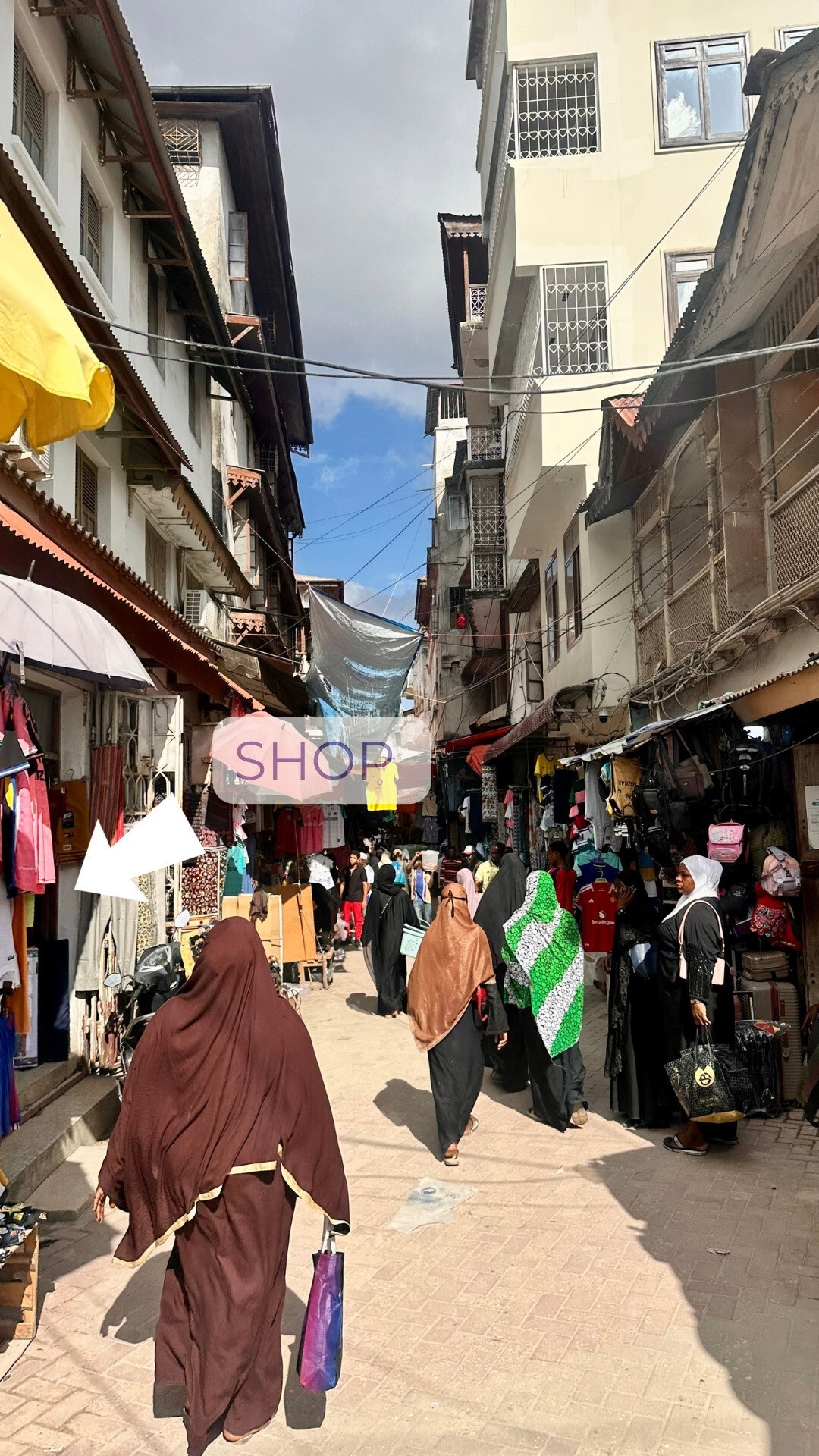
Here, shopping doesn’t mean simply walking into a store, choosing from hundreds of options, ordering more if you need it, paying at the counter (by card) and getting it all done almost on the side. Or perhaps ordering online and saving yourself the trip altogether.
In Tanzania, shopping – especially when you’re looking for special fabrics – means taking your time. You search the noisy, bustling market for little nooks and peek into hidden corners and doorways, because that’s often where the loveliest treasures are found. At every turn, a shopkeeper or stallholder is eager to claim your attention.
But what a joy when you finally find what you’re looking for! Here, too, there are hundreds of options to choose from. First, though, you have to make your way through piles of seemingly jumbled fabrics. Natafuta: I’m looking for… and then I pay – after what have by now become fairly confident negotiations, of course in cash.
16 Oktober 2026
Darajani Market
A REAL BUTTERFLY!
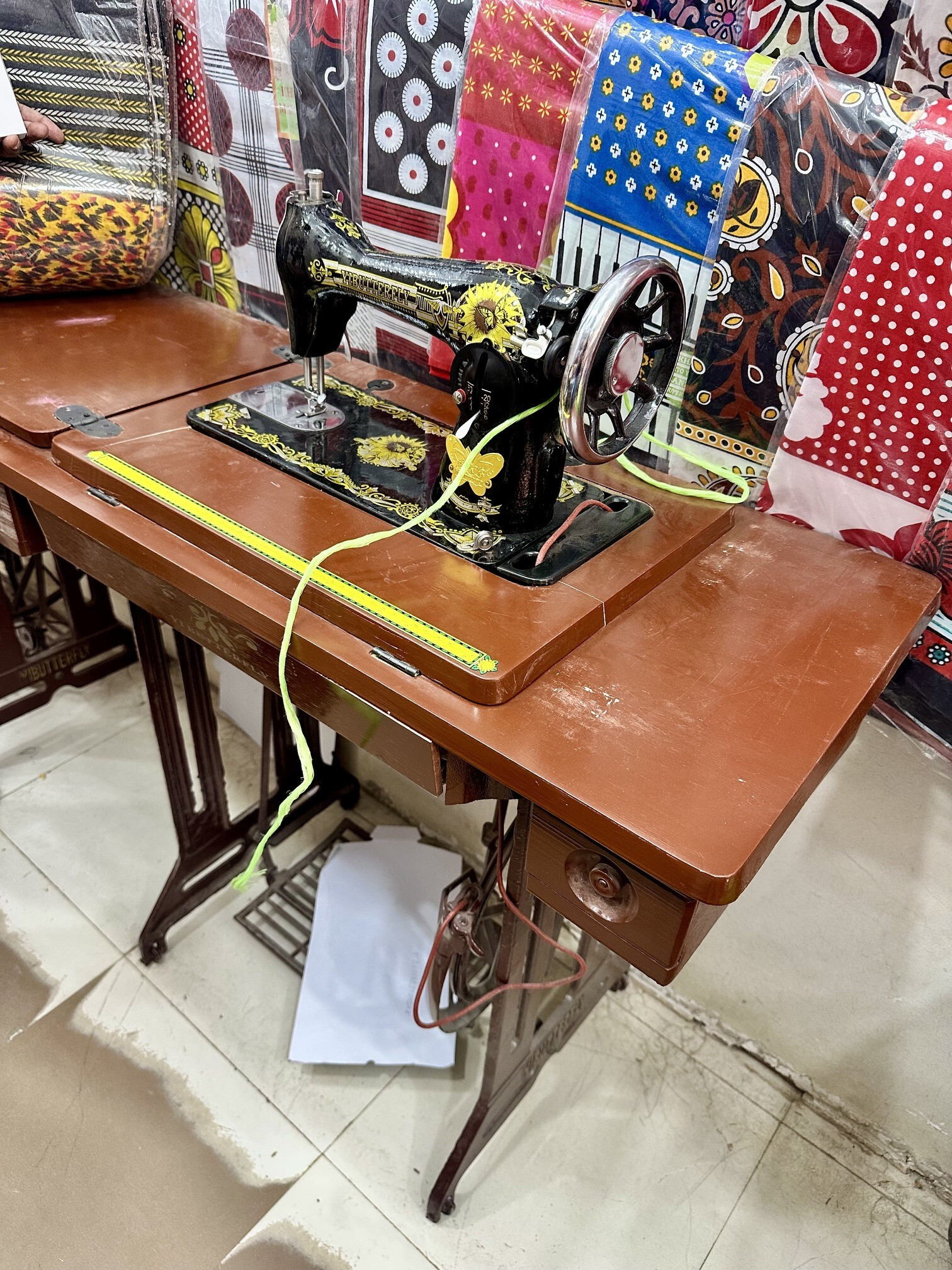
Today we bought Habiba a new sewing machine: a genuine Butterfly, complete with a treadle and sewing table, just as it should be. It runs entirely by foot power, so Habiba can keep sewing even during the frequent power cuts.
The warranty lasts one week, and the machine will travel home by bajaj, a local tuk-tuk. Once again, we’re relying on things somehow working out here. They usually do.
Thank you to everyone who makes stories like this possible!
30 September 2026
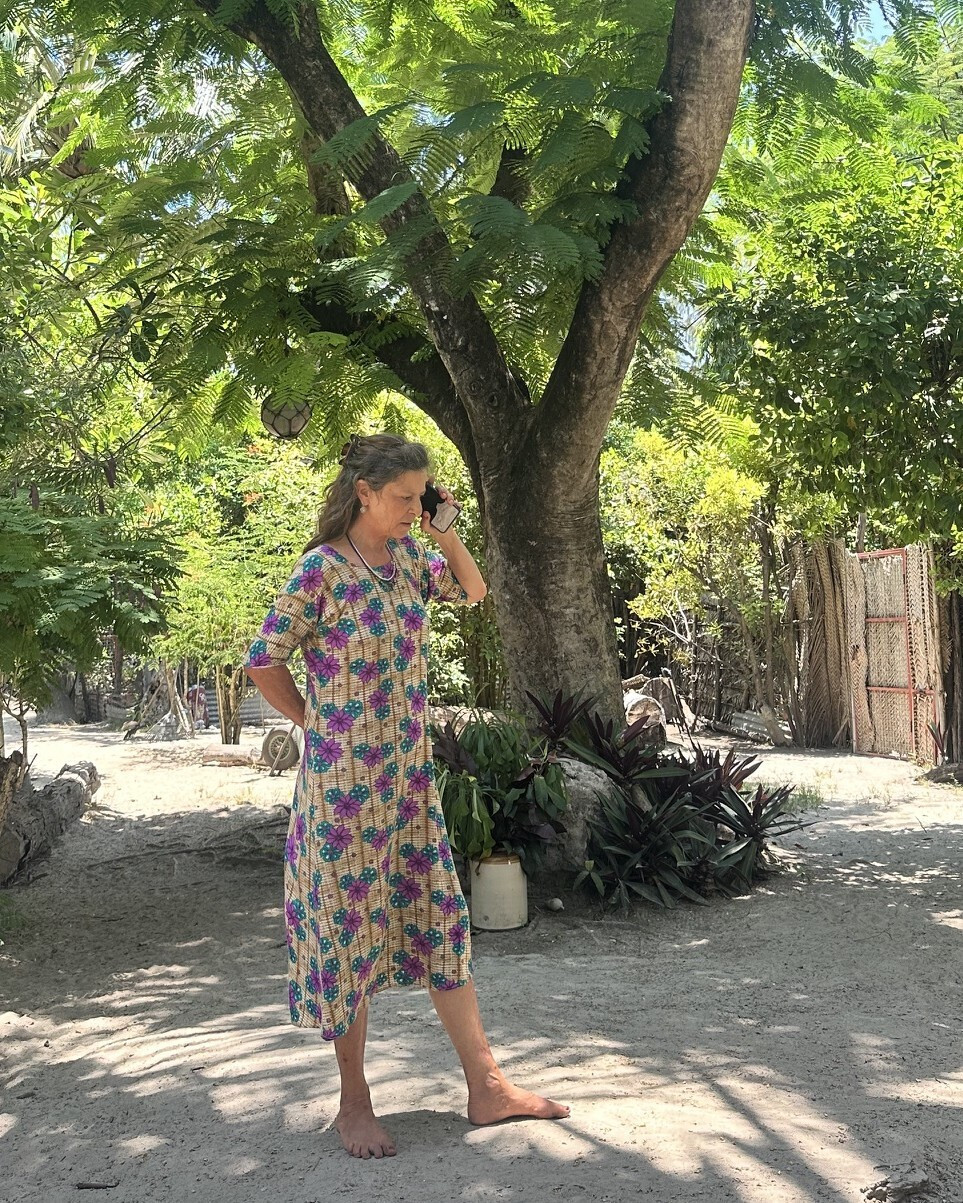
Bwejuu und Stone Town
ANN – A STROKE OF LUCK
She knows the answers to (almost) every sewing question, speaks fluent Swahili, English and Swiss German, cares about people and animals, and is a wonderful person herself. Having Ann bring her wide-ranging knowledge and experience to KULALA is an incredible stroke of luck.
Our “Gotti” – Swiss German for godmother – feels at home on both sides of the island. She also rents out the apartment in Stone Town (yes, the one with the washing machine). She looks at the project with the eye of a mentor and shares what she has learned in 27 years on Zanzibar. That is a wonderful gift, and quite simply priceless.
27 September 2026
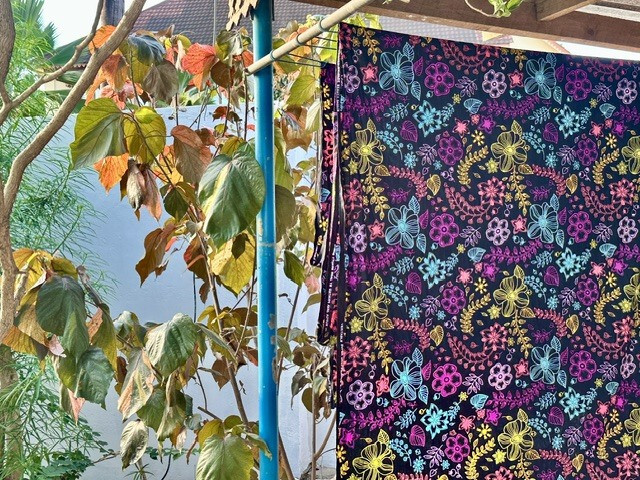
Stone Town, Kiembe Samaki
PUTTING THE FABRICS TO THE TEST
Before the fabrics can become bedding, they go through a few rounds in the washing machine. They are soaked, measured, washed, measured again and checked for colour loss. It takes time, but we’d rather have a surprise now than when the bedding is finished.
We still learned a thing or two along the way. Labels can bleed colour too. And it’s well worth checking the washing machine before starting the next load…
20 September 2026

Dar es Salaam
FABRIC SHOPPING – NO WORRY!
Dar es Salaam is loud, dusty, crowded – and fascinating. Together with Habiba and her sister Rahema, we set out to find fabrics for the first KULALA sets.
The choice of kitenges is fantastic. Finding plain fabrics proves trickier, just as we expected: African cotton is nowhere to be found, even in Dar. In the end, we discover beautiful cotton and linen fabrics in colours that work – from India. Sometimes the idea has to adapt to the fabric.
When we ask if we can pay by card, the answer is, as always, “No worry!” An hour and several banks later, we finally have enough cash. “No worry” often takes time, and sometimes an extra round or two …
Dinner and a night at Rahema’s home in a village just outside Dar are a wonderful experience for a Swiss mzungu. Her hospitality is deeply touching – and the visit becomes so much more than a search for fabric.
17 September 2026
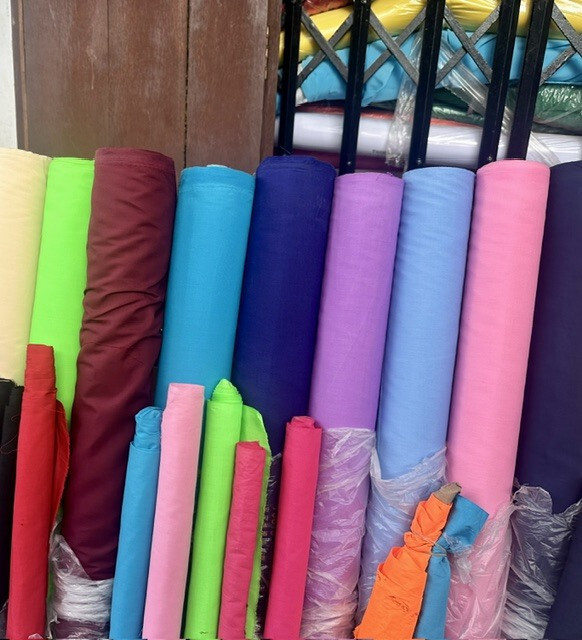
Stone Town, Darajani Market
GENUINE AFRICAN COTTON…
Africa is known for its cotton. So finding plain Tanzanian cotton for the back of KULALA’s bedding should be easy – perhaps even organically grown cotton. We thought.
We searched Darajani Market in Stone Town and contacted a number of companies and traders. Few replied, and answers about where the fabric came from and how it was made were often vague. In the shops, too, we had to ask more questions. “Yes, pure cotton” wasn’t always a reliable answer. After all, they wanted to make a sale.
At least polyester is called polyester in Swahili, too. When in doubt, a thread and a lighter can help: cotton burns; polyester melts (and smells). Sadly, that still doesn’t tell us where the cotton came from. The search for African cotton whose origins we can trace continues.
7 September 2026
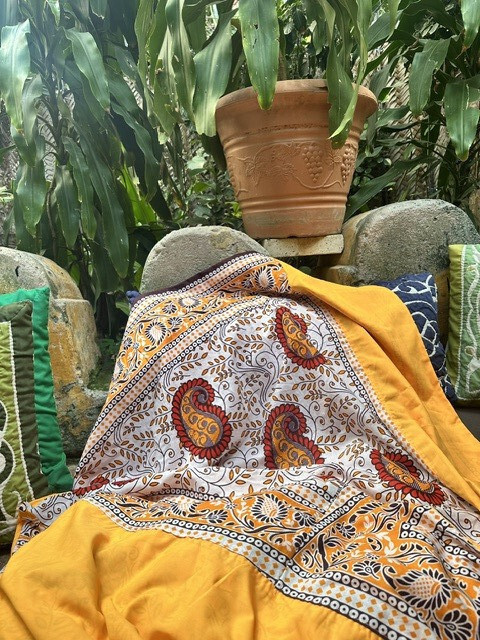
Stone Town, Hurumzi Street
KAnga or Kitenge?
A beautiful fabric at the market doesn’t automatically make beautiful bedding. And first, there was a question to settle: kanga or kitenge?
Kitenge is a fairly dense cotton fabric. It can feel a little stiff at first, but becomes softer with washing and use. There are thousands of patterns – finding the truly lovely ones takes some searching. For the winter collection, this printed cotton seems ideal, especially for the large panels of a duvet cover.
Kangas, on the other hand, are lightweight cotton fabrics with a distinctive border and often a Swahili saying. The patterns are wonderful, and so is the feel: soft and gentle to the touch. After several attempts and quite a few kilometres on foot, we finally find larger kangas that would work beautifully for the summer collection.
And already we’re learning: good things take even more time here than they do at home.
5 September 2026
This website uses cookies. Here you can choose which cookies you want to allow and change your selection at any time. By clicking "Accept", you agree to the use of cookies.